What Would Constantine Do? A Post on Science and Migration in Honor of World Leprosy Day 2026

“Recently, Mycobacterium lepromatosis, a new unculturable mycobacterial species associated with diffuse lepromatous leprosy, also known as Lucio’s leprosy or Latapi’s leprosy, was described by Han et al.” (Singh and Cole 2011)

Housed high at the monastery of Monte Cassino in southern Italy, looking out over the Mediterranean world, what would Constantinus Africanus, our leprosy specialist from 1000 years ago, have made of this news of a “new” species of leprosy? As the author of the earliest specialized Latin treatise on leprosy, he would have understood that the disease manifested in different ways. As the translator of works that would shape the face of European medicine for the next 400 years, he would have understood the incredible capacity of medical knowledge to alleviate human suffering.


The modern abbey of Monte Cassino. Source: Martin Collin, Wikimedia, https://commons.wikimedia.org/wiki/File:View_of_Monte_Cassino_monastery_from_Polish_cemetery.jpg, accessed 25.i.2026.

But there was also much he wouldn’t have been able to process. He would have had no mental framework to grasp the concept of “bacteria.” Not simply would the Mexican physicians Rafael Lucio Nájera (1818-1866) and Fernando Latapí (1902-1989) have been unknown to him, but so would the very idea of “Mexico.”1 He would have had trouble seeing how both this “second species” of leprosy as well as the first (Mycobacterium leprae, discovered in 1873) could be connected to human migrations over the course of millennia, for he would have had no concept of evolution.

Nevertheless, he may be just the inspiration we need right now. This year, as we celebrate World Leprosy Day 2026, the modern world’s infrastructure of global health is being torn apart as the result of anti-science and anti-immigrant sentiments. This 11th-century Arabic-speaking North African émigré/Italian immigrant, who first introduced Islamic medicine to Christian Europe, is not only a representative of science, but also a reminder of the role migration plays in human health and disease. It is part of who we are as humans, and it has been because of human migrations that many infectious diseases have been acquired. And it has also been in the process of fighting infectious diseases that the medical arts and sciences have been born.

Confirming the Deep Human History of Mycobacterium lepromatosis in the Americas

In this past year, one of the youngest fields of science, paleogenomics, pushed back the history of leprosy in the “new” worlds of the Americas by at least 10,000 years. As specialists in leprosy around the world will admit, social stigma creates barriers to open discussion and humane treatment. Although leprosy has long carried that burden, recognizing it as a global disease gives us a new way to think beyond stigma and focus instead on shared histories.

In 2023, I wrote about both Han’s leprosy, M. lepromatosis, and Hansen’s disease, M. leprae. When I first learned about M. lepromatosis in 2012, four years after it had been clinically described in 2008 by its real discoverer, Xiang-Yang Han (an infectious disease specialist at the M. D. Anderson Cancer Center in Houston), my immediate thought was “How can there be a ‘new’ species of such an old, slowly evolving disease?” I followed Han’s subsequent work
on the genetic structure and epidemiology of M. lepromatosis and saw that he, too, suspected that the organism had a very deep history. So deep, in fact, it must have predated modern humans.

That gut sense was confirmed this past year, when two separate studies retrieved molecular fragments of the organism from buried remains in the Americas dating back, in one case, to at least 4000 years ago (Ramirez et al. 2025). Even that estimate was likely conservative, since the evolutionary distance between the strains recovered from Canadian and Argentinian aDNA and a living strain still found in North America suggested that the organism may have been circulating in human hosts for at least 10,000 years (Lopopolo et al. 2025). Comparing the evolution of the two leprosies (which are more closely related to each other than any other known organisms in the world), it now seems that, evolutionarily, they may have diverged from each other somewhere between 700,000 and 2 million years ago.

Since modern humans did not exist 700,000 years ago, in what host(s) have these two diseases persisted? It was already well known that at least one of the Old World strains of leprosy, M. leprae, established itself among armadillos in the Americas following its importation into the Americas, perhaps as early as the 16th century. But that was clearly a new, post-Contact transference from humans to armadillos. As discussed in the World Leprosy Day blogpost last year, squirrels have now been confirmed in the transmission of leprosy in medieval England, no doubt thanks to the intense use of squirrel furs for a high-end cloak lining known as vair. But whether humans gave it to squirrels, or squirrels to humans, is still unclear.

A crowned figure examining a urine flask, from a late 12th-century compendium (made in northern France) of southern Italian medical texts. The lining of the figure’s cloak shows the characteristic pattern of vair, squirrel’s fur, whose use may have been involved in the spread of leprosy. Source: Breslau Codex, f. 156ra, detail: initial ‘D’ opening Maurus, De urinis.

The squirrel connection was all the more perplexing because it has been known since 2014 that M. lepromatosis (the “American” leprosy) also is found in squirrels in the United Kingdom. It is now estimated that the lineage of M. lepromatosis found in UK squirrels branched off from its known American cousins about 3000 years ago. When (and how) it was transferred eastward across the Atlantic remains completely unclear.

Infectious Diseases, Migration Histories, and Candlesticks

Even beyond the squirrel question, having the history of leprosy in the Americas so vastly expanded by just two studies allows us to situate this “new world” disease against our narratives of its closest known “old world” relative, M. leprae, whose pre- and post-Contact globalizing histories have been recounted in previous posts. For the post-Contact history, family trees of M. leprae’s modern genomes have informed us about its westward transmission across the Atlantic as systems of colonization and slavery expanded (Green 2022). For the pre-Contact period, we already know the evolutionarily oldest strains are found near the Pacific Rim coast, with expansion eastward into the Pacific Islands (Green 2025a) hundreds of years before Europeans and Africans regularly crossed the Atlantic.

For more than a decade, molecular clock estimates have suggested that M. leprae’s sustained history in humans only went back about 5-6000 years. Interestingly, a major study published this past year looking at a variety of infectious diseases in humans across Eurasia for the past 37,000 years found a similar pattern:

“Zoonotic pathogens are only detected from around 6,500 years ago, peaking roughly 5,000 years ago,coinciding with the widespread domestication of livestock. Our findings provide direct evidence that this lifestyle change resulted in an increased infectious disease burden. They also indicate that the spread of these pathogens increased substantially during subsequent millennia, coinciding with the pastoralist migrations from the Eurasian Steppe.” (Sikora et al. 2025)

A map showing the locations of 1313 samples of human remains, covering a period of 37 millennia, used for a recent study of human infectious diseases in Eurasia. The yellow circles indicate where M. leprae was retrieved in the last 2000 years. Source: Sikora et al. 2025.

A cumulative map of M. leprae aDNA retrieved thus far from Afro-Eurasia is actually much fuller than this, but it is painting a fairly consistent picture. Most of that expansion seems to have happened in the past 2500 years or so. Circumstantially, many of those expansions seem to have been within the context of human migrations, either voluntary or involuntary.

Just this past week, a team of bioarchaeologists and paleogeneticists published another aDNA study documenting the presence in Colombia at least 5000 years ago of a strain of another human pathogen, Treponema pallidum, that was a “sister” to the strains that would branch into the three subspecies we know today causing syphilis (T. p. pallidum), yaws (T. p. pertenue), and bejel (T. p. endemicum). Noting that such discoveries “make it possible to move beyond simplistic ideas of where diseases geographically come from,” an editorial accompanying the study observed that:

“Far from static or specific to a human population or environment, pathogens are tethered to mobile human and animal hosts and reservoirs, molded by human experiences and biosocial and environmental conditions, adaptable, and globalized.” (Zuckerman and Bailey 2026)

Like leprosy, syphilis has been a disease that, at least once it manifested in Europe at the end of the 15th century, elicited stigma and ostracization. But to say that hatred or bigotry are perennial companions of infectious disease shows an unawareness of history. Reactions have never been uniform. Bioarchaeology repeatedly gives us examples of care rather than ostracism; the historical record is increasingly giving us evidence of communalism in the face of overwhelming pandemic onslaughts, not just anarchy and accusations (Green 2025b).

As paleogenomics offers us, for the first time, the opportunity to construct long evolutionary histories of the world’s most impactful diseases, we have the opportunity to rethink what it means for pathogens to be “tethered” to our histories. Combining those material histories of disease with intellectual and social histories of the medical arts and sciences allows us to reconceive how science itself is part of the landscape we have created. Note that word “adaptable.” Just as the pathogens adapt to new hosts (human and animal), so medical science has allowed humans to continually adapt to new environments. And medical science is necessarily cumulative. There is a reason the first Hippocratic aphorism reads “Life is short. The art is long.”

In the United States, where I write today, science and immigrants are both under attack. The entire system of public health infrastructures—from vaccines to food safety to environmental protections—is being dismantled at the same time that extraordinarily cruel measures are being implemented to chase out and deport immigrants exactly like Constantine would have been a millennium ago.

Once again, Constantine helps reset our balance. A 12th-century pair of exquisitely crafted candlesticks, perhaps made at the Belgium abbey of Stavelot, depict the world’s three (!) continents and what each offered human culture (Qassiti 2026, drawing on Müller 2023). AFRICA displays an open book with the inscription SCIENTIA—wisdom, learning, science. MEDICINA and THEORICA/PRACTICA (theory and practice), on the other candlestick, seem to be a particular nod to Constantine’s recent impact on medical learning in Europe. Is it a coincidence that the abbot of Stavelot, Wibald (1098-1158), had himself briefly served as abbot of Monte Cassino around the time these extraordinarily crafted works of art were made?
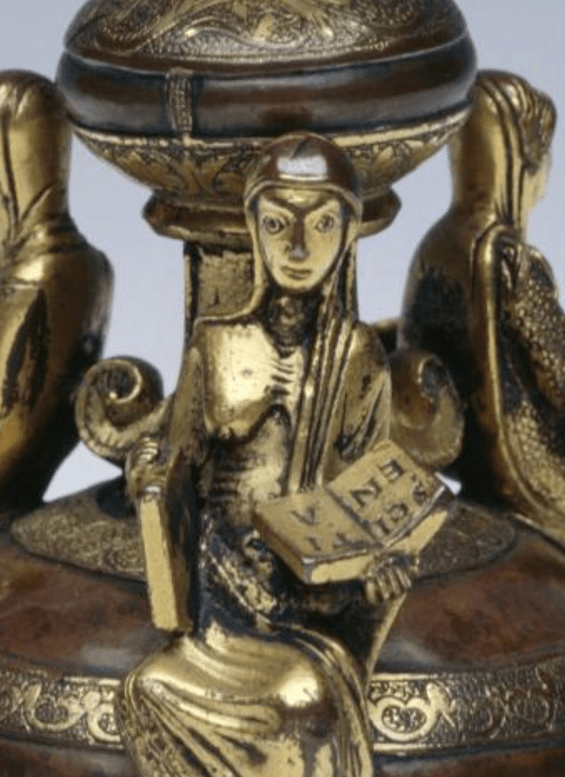
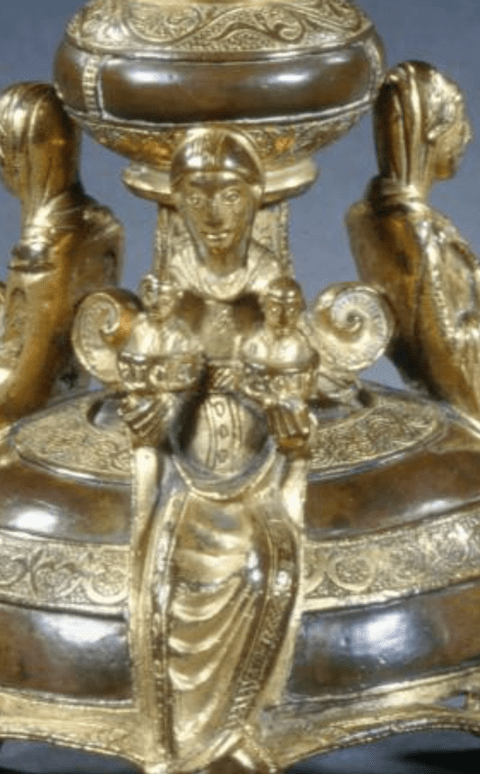
Details of the Hildesheim candlesticks with allegorical figures associating Scientia with Africa (left), and Theorica and Practica (right) with Medicina, 12th century. Source: Fotograf*in: Christian Tepper; https://www.bildindex.de/document/obj20313186, accessed 25.i.2026.

Infectious diseases arise because humans do what humans do. They interact with their environments. They explore. They migrate. The medical sciences and humanities are our response to the accidental harms we encounter. Leprosy’s long global history reflects back at us the millennia of encounters we’ve had with this disease. Its mirror also shows us the choices we can make now in living up to our fullest potential as human beings: to care for each other, celebrating the wisdom we have acquired and seeking even more. May we all be candles of such light!


This essay is dedicated to the memory of Francis Lanneau Newton, (28 February 1928 – 14 February 2025), amicus optimus Constantini Africani.


Further Reading:

Bozzi, Davide, Nasreen Z. Broomandkhoshbacht, Miguel Delgado, Jane E. Buikstra, Carlos Eduardo G. Amorim, Kalina Kassadjikova, Melissa Pratt Estrada, Gilbert Greub, Nicolas Rascovan, David Šmajs, Lars Fehren-Schmitz, Anna-Sapfo Malaspinas, and Elizabeth A. Nelson. “A 5500-year-old Treponema pallidum Genome from Sabana de Bogotá, Colombia,” Science 391, no. 6783 (22 Jan 2026).

Gili, Anna. Leprosy in the Mediterranean Medical Literature: The ‘Kitāb al-Malakī’ and Related Texts (Berlin: De Gruyter, 2026).

Green, Monica H. “Leprosy as an Endemic Disease: The US and Brazil,” Twitter thread for World Leprosy Day 2022, 30 January 2022, archival copy posted on Knowledge Commons, https://doi.org/10.17613/fn8m2-xwp73.

Green, Monica H. “Hansen’s Disease, Han’s Disease, and the Global History of Leprosy – World Leprosy Day 2023 Twitter thread,” Twitter, 29 February 2023, archived at Knowledge Commons, https://doi.org/10.17613/padf2-vcj87.

Green, Monica H. “The Stigma of Neglect: Why We Know Less Than We Should About Medieval Leprosy. A Post in Honor of World Leprosy Day 2024,” Constantinus Africanus (blog), 28 Jan 2024, https://constantinusafricanus.com/2024/01/28/the-stigma-of-neglect-why-we-know-less-than-we-should-about-medieval-leprosy/, archived at Knowledge Commons, https://doi.org/10.17613/f2sv4-73114 .

Green, Monica H. “Leprosy in the Global Middle Ages: A Slow Pandemic. A Post in Honor of World Leprosy Day 2025,”
Constantinus Africanus, 26 Jan 2025, https://constantinusafricanus.com/2025/01/26/leprosy-in-the-global-middle-ages-a-slow-pandemic/, archived copy on Knowledge Commons, https://doi.org/10.17613/y59xw-v4g32. [Green 2025a]

Green, Monica H. The Black Death: The Medieval Plague Pandemic Through the Eyes of Ibn Battuta, History for the 21st Century (H21) Project, 01 Sep 2025, https://www.history21.com/owit-module/the-black-death-the-medieval-plague-pandemic/, https://doi.org/10.17613/qeznz-tcx61. [Green 2025b]

Lopopolo, Maria, Charlotte Avanzi, Sebastian Duchene, Pierre Luisi, Alida de Flamingh, Gabriel Yaxal Ponce-Soto, Gaetan Tressieres, Sarah Neumeyer, Frédéric Lemoine, Elizabeth A. Nelson, Miren Iraeta-Orbegozo, Jerome S. Cybulski, Joycelynn Mitchell, Vilma T. Marks, Linda B. Adams, John Lindo, Michael DeGiorgio, Nery Ortiz, Carlos Wiens, Juri Hiebert, Alexandro Bonifaz, Griselda Montes de Oca, Vanessa Paredes-Solis, Carlos Franco-Paredes, Lucio Vera-Cabrera, José G. Pereira Brunelli, Mary Jackson, John S. Spencer, Claudio G. Salgado, Xiang-Yang Han, Camron M. Pearce, Alaine K. Warren, Patricia S. Rosa, Amanda J. de Finardi, Andréa de F. F. Belone, Cynthia Ferreira, Philip N. Suffys, Amanda N. Brum Fontes, Sidra E. G. Vasconcellos, Roxane Schaub, Pierre Couppié, Kinan Drak Alsibai, Rigoberto Hernández-Castro, Mayra Silva Miranda, Iris Estrada-Garcia, Fermin Jurado-Santacruz, Ludovic Orlando, Hannes Schroeder, Lluis Quintana-Murci, Mariano Del Papa, Ramanuj Lahiri, Ripan S. Malhi, Simon Rasmussen, and Nicolás Rascovan. “Uncovering Pre-European Contact Leprosy in the Americas and Its Enduring Persistence,” Science 389 (24 Jul 2025), eadu7144.

Müller, Kathrin. “Sancta Sapientia and the Science of Medicine: A Pair of Twelfth-Century Candlesticks with Female Allegories in Hildesheim,” Codex Aquilarensis 39 (2023), 61–78.

Qassiti, Mohamed. “Constantinus Africanus – A North African Migrant Revolutionises Medieval Latin Medicine,” Deutsche Digitale Bibliothek, 13 Jan 2026, https://www.deutsche-digitale-bibliothek.de/content/blog/constantinus-africanus-ein-nordafrikanischer-migrant-revolutioniert-die-lateinische-medizin-des-mittelalters?lang=en.

Ramirez, Darío A., T. Lesley Sitter, Sanni Översti, María José Herrera-Soto, Nicolás Pastor, Oscar Eduardo Fontana-Silva, Casey L. Kirkpatrick, José Castelleti-Dellepiane, Rodrigo Nores and Kirsten I. Bos. “4,000-Year-Old Mycobacterium lepromatosis Genomes from Chile Reveal Long Establishment of Hansen’s Disease in the Americas,” Nature Ecology and Evolution 9 (2025), 1685–1693.

Sikora, Martin, Elisabetta Canteri, Antonio Fernandez-Guerra, Nikolay Oskolkov, Rasmus Ågren, Lena Hansson, Evan K. Irving-Pease, Barbara Mühlemann, Sofie Holtsmark Nielsen, Gabriele Scorrano, Morten E. Allentoft, Frederik Valeur Seersholm, Hannes Schroeder, Charleen Gaunitz, Jesper Stenderup, Lasse Vinner, Terry C. Jones, Björn Nystedt, Karl-Göran Sjögren, Julian Parkhill, Lars Fugger, Fernando Racimo, Kristian Kristiansen, Astrid K. N. Iversen, and Eske Willerslev. “The Spatio-temporal Distribution of Human Pathogens in Ancient Eurasia,” Nature 642 (24 Jul 2025), 1011-1019.

Singh, Pushpendra, and Stewart T. Cole. “Mycobacterium Leprae: Genes, Pseudogenes and Genetic Diversity,” Future Microbiology 6, no. 1 (2011), 57–71, https://doi.org/10.2217/fmb.10.153.

Zuckerman, Molly K. and Lydia Bailey. “Uncovering the Secrets of Syphilis,” Science 22 January 2026, 352-353, https://doi.org/10.1126/science.aee7963.


1 Constantine had, of course, had close associations with the Norman nobility who arrived in southern Italy around the same time he did (and who may have even commissioned his treatise on leprosy). Whether anyone in these circles knew about the possible Norse encounters with Mesoamerica around the year 1000 is unclear; see Valeria Hansen, The Year 1000: When Explorers Connected the World—and Globalization Began (New York: Scribner, 2020).
The Stigma of Neglect: Why We Know Less Than We Should About Medieval Leprosy

A Post in Honor of World Leprosy Day 2024

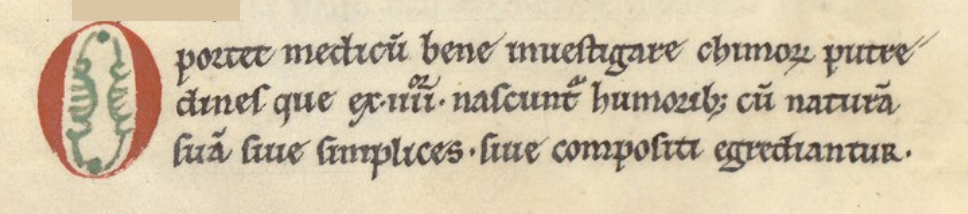
An image from a medieval manuscript, showing a large initial “O” in red, with Latin text following it. The manuscript is owned by the Convent of St Francis of Assisi. Source: Assisi, Biblioteca del Convento di S. Francesco, MS 573, f. 115r.
Opening of the text of Constantine the African’s De elephancia (On Leprosy), in a recently discovered later 12th-century manuscript. Assisi, Biblioteca del Convento di S. Francesco, MS 573, f. 115r.

We don’t know exactly when Constantine the African wrote his treatise on leprosy, De elephancia (and yes, the ancient Greek name for the disease means exactly what it looks like: “the elephant disease”). Nor, in the absence of a dedicatory prologue (which we do have for some of his other texts), can we say whether this short, 11th-century Latin treatise was a “bespoke” production, prepared for a particular person or situation. 

Yet given our modern image of medieval Europe as a landscape riddled with leprosy, and given the extraordinary medieval popularity of many of Constantine’s other works (some of which survive in more than 100 copies), the existence of only ten independently circulating copies of Constantine’s leprosy text is puzzling. Something doesn’t sync.

The last Sunday of January every year is designated World Leprosy Day. It is meant to acknowledge the fact that leprosy (“Hansen’s Disease”) still exists, even though effective treatments to cure the condition have been available for several decades. The theme for World Leprosy Day 2024 is “Ending Stigma, Embracing Dignity.” Stigma is a very real factor in the continued prevalence of leprosy. As many as 200,000 people per year are newly diagnosed and many are successfully cured, yet public shame and social shunning still make many who are afflicted reluctant to seek out diagnosis and care. In other words, we should put as much effort into understanding why stigma persists as we do investigating the pathogen’s evolutionary history or its potential animal or environmental reservoirs.

As we commemorate World Leprosy Day this year, we might think about what it means that close to 950 years after its composition, we still have gaps in our knowledge not simply about the author of the De elephancia—the Arabic-speaking North African emigré, Constantinus Africanus, who died before 1098/99—but also about the text’s original users and its significance as a sophisticated piece of medical writing. What did it mean that one of the most influential Benedictine writers of the Middle Ages had written a specialized text on this disease, without stigmatizing it or its sufferers, but rather treating it as natural condition meriting natural interventions? 

The Character of the Text

In Latin, the De elephancia is just under 2600 words. Just a bit longer than this blogpost. Less than a full page in some finely-written manuscript copies. Yet it is longer than the attention Constantine gives to leprosy in his other works where he discusses the disease: the theoretical half of the Pantegni, a major encyclopedia of medicine, or the Viaticum, a “handbook for travelers.”

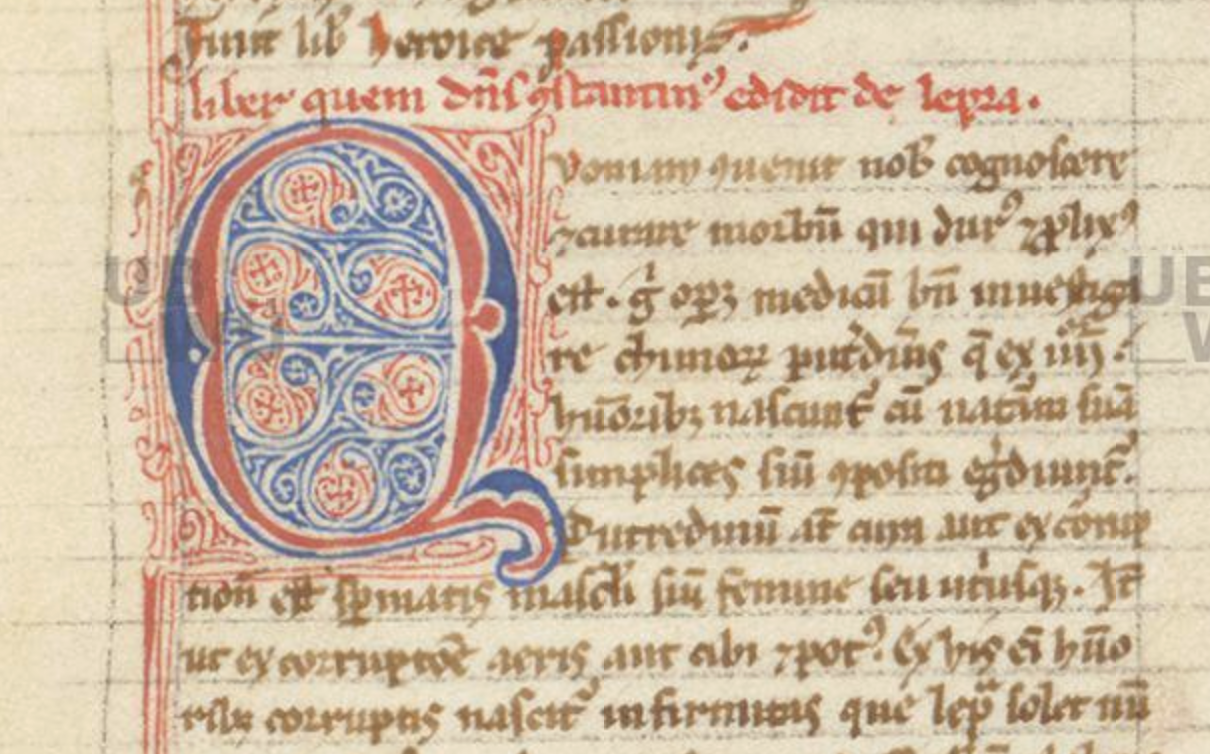
The opening of the text of Constantine the African’s De elephancia (On Leprosy), showing a handwritten manuscript page and a large initial letter ‘Q’ with filigree in red and blue ink. Source: Würzburg, Universitätsbibliothek, m. p. med. f. 3, f. 183r (detail).
In this mid-13th century copy of the De elephancia, made in southern France, the text takes up less than one page. Würzburg, Universitätsbibliothek, m. p. med. f. 3, f. 183r (detail).

Constantine’s assessments of leprosy, here in the De elephancia and in the Viaticum, convey the same theoretical understanding of the disease, one that had not previously been found in Latin medical writings. That is, that the disease is fourfold in nature, stemming from differences that arise depending on which of the four humors is defective. He begins the De elephancia thus:

It behooves the physician to investigate the putrefaction of the chyme, from which are born the four humors, along with their natures, which are either simple or complex. The cause of the putrefaction can come either from the corruption of the semen (of the male or the female),1 or from both, or from the corruption of the air, or food and drink. From these corrupt humors arises the infirmity, which is customarily called elephantia.2 The discernment of this condition is difficult and laborious in its early phases. But after it becomes openly apparent, this disease is harder to treat.

MF, p. 74

Constantine then goes on to specify the symptoms that characterize each of these four kinds of leprosy. Then, he introduces their names:

When the disease arises from blood, it is called alopicia. When instead it is created by red bile, it is named leonina. If from black bile, it is called elephantia. If from phlegm, it is called tiria.

MF, p. 80

Treatments—involving phlebotomy or cupping, purgatives, diet, eye washes, and astringents to treat the pustules, and ointments to soothe the skin—are then laid out. All are very detailed and precise, down to the amounts of individual ingredients. Take, for example, this unguent:

This unguent cleanses the whole body of putrefaction:Take three ounces of litharge [lead oxide], two ounces each of alum and quicksilver, two drams each of roses and white lead, three and a half drams each of savin, liquid storax, cadmium, one ounce each of the ashes of mastic and vitriol. Let all these be mixed with the juice of myrtle fruit, which is then cooked down until only one-third remains, and add rose oil as needed. Then, anoint the body with this for seven days; on the eighth day, [anoint just] with rose oil. On the ninth day, [anoint] with vinegar of wild grapes. On the tenth day, let the patient bathe.

MF, p. 88

Any dermatologist reading these instructions is probably cringing, because these are powerful chemicals; several have long since been banned from medicinal use. But for many centuries, such powerful astringents and corrosives were used to treat skin conditions. What is notable here is that after the week-long regimen of corrosives, there was an ameliorating healing regimen of oil, then vinegar, and then simple bathing in water. 

Other sections of the text draw on a complicated polypharmacy that, in the context of 11th-century southern Italy, would have assumed a certain wealth of its users. And that is one of the clues that prompts us to ask: was this text bespoke?

The Author and His Audience

As noted, the work has no dedicatory preface to tell us for whom it was made, nor to explain the author’s intentions. In fact, it is almost certain that we really shouldn’t be calling Constantine “the author.” It is well known that Constantine functioned primarily as a translator, rendering Arabic works into Latin (mostly by writers from North Africa, whence he came—and whence the epithet Africanus). The De elephancia, too, may have been a translation, likely of one of Constantine’s most frequent sources, the Qayrawan author, Ibn al-Jazzār (d. ca. 979).

We know that, eventually, after his arrival in southern Italy, Constantine was well supported by grants and donations from the local nobility and church leaders to render such works of Arabic medicine into Latin.3 While we don’t know the exact order of most of his compositions, it is likely that De elephancia was one of his earlier translations, perhaps coming before his De stomacho (On the Stomach), written for an archbishop of Salerno who had patronized him before dying in 1085, and the Pantegni, written for his abbot at Monte Cassino, who became pope that same year. 

As with the archbishop and his stomach problems, it’s possible that the patronage Constantine received came from his ability to produce bespoke works for particular clients. One such potential local “client” who was manifesting leprosy symptoms around this time, and whose family would have had the wealth to obtain expensive ingredients, was an elder (and illegitimate) son of Count Roger I, who reigned as count of Sicily from 1072 until his death in 1101. A recent study by historian Dawn Marie Hayes has established that this son was afflicted with leprosy, throwing his ability to inherit into doubt. 

As Hayes observes, the father, Roger, seems to have done whatever he could to help his son, including founding two monasteries that, both in their religious associations and in their physical locations, seem to have been strongly associated with leprosy and its treatment. Given the patronage the Normans gave Constantine, commissioning a bespoke treatise from the star medical scholar at Monte Cassino would be an obvious course of action. 

We don’t have the Arabic original that Constantine was using to write the De elephancia, so we cannot know if or how he adapted his source. As we have it now, there is nothing about this text to suggest that leprosy was a stigmatized disease. The very fact that Constantine (or his source) has distinguished different types of the disease, recognized the kinds of symptoms that create pain or discomfort, and developed complex therapies to address them—all signal, not stigma, but attentive care. 

The Impact of the De elephancia

If, as seems possible, the De elephancia came from a privately motivated impetus, that may explain why it remained closely associated with Constantine’s other specialized texts: his treatise on the stomach (also bespoke), a work on diseases of the eyes, another on depression. To the ten surviving independently circulating copies of the De elephancia, we can add two more “witnesses”: references to the text in library inventories. In ten of those twelve cases, the De elephantia (also called De lepra) appears in collections of Constantine’s works. For example, De lepra is listed among a major collection of medical books owned in the middle of the 12th century by the bishop of Hildesheim, Bruno (d. 1161).

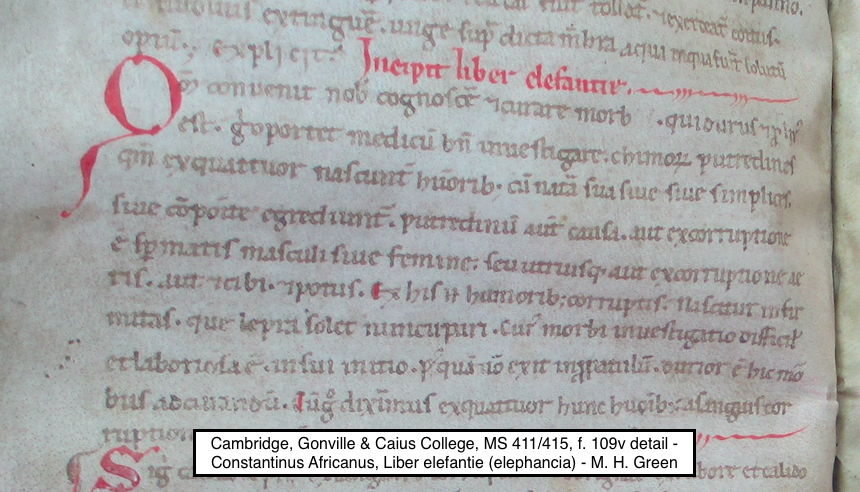
The first of two images from two medieval manuscripts. On the left, a manuscript page including the words in red, “Incipit liber elefantie” (Here begins the Book on Leprosy). On the right, a neatly written manuscript page with a red arrow and underlining flagging the words “Liber de lepra” (Book on Leprosy). Sources: Cambridge, Gonville and Caius College, MS 411/415, f. 109v; and Paris, Bibliothèque de la Sorbonne, MS 636, f. 26v.The second of two images from two medieval manuscripts. On the left, a manuscript page including the words in red, “Incipit liber elefantie” (Here begins the Book on Leprosy). On the right, a neatly written manuscript page with a red arrow and underlining flagging the words “Liber de lepra” (Book on Leprosy). Sources: Cambridge, Gonville and Caius College, MS 411/415, f. 109v; and Paris, Bibliothèque de la Sorbonne, MS 636, f. 26v.
Witnesses to Constantine’s De elephantia, both surviving and lost: on the left, a copy now in Cambridge, Gonville and Caius College, MS 411/415, f. 109v; on the right, a page describing a medical volume owned by the French physician and cleric, Richard de Fournival (d. 1260), Paris, Bibliothèque de la Sorbonne, MS 636, f. 26v.

Besides whatever circulation this tiny text may have had on its own (it might, for example, have been included with a letter of advice, and we’d never have any trace of it), it also had a secondary life that made it a permanent fixture in European learned medicine. The De elephancia was incorporated wholesale into the Practica of the Pantegni, when some unknown editor “re-created” that previously lost second half of Constantine’s encylopedia sometime in the 12th century. And that encyclopedia—now made whole—appeared as a fixture in religious and university libraries all over Europe.4

Leprosy and Stigma
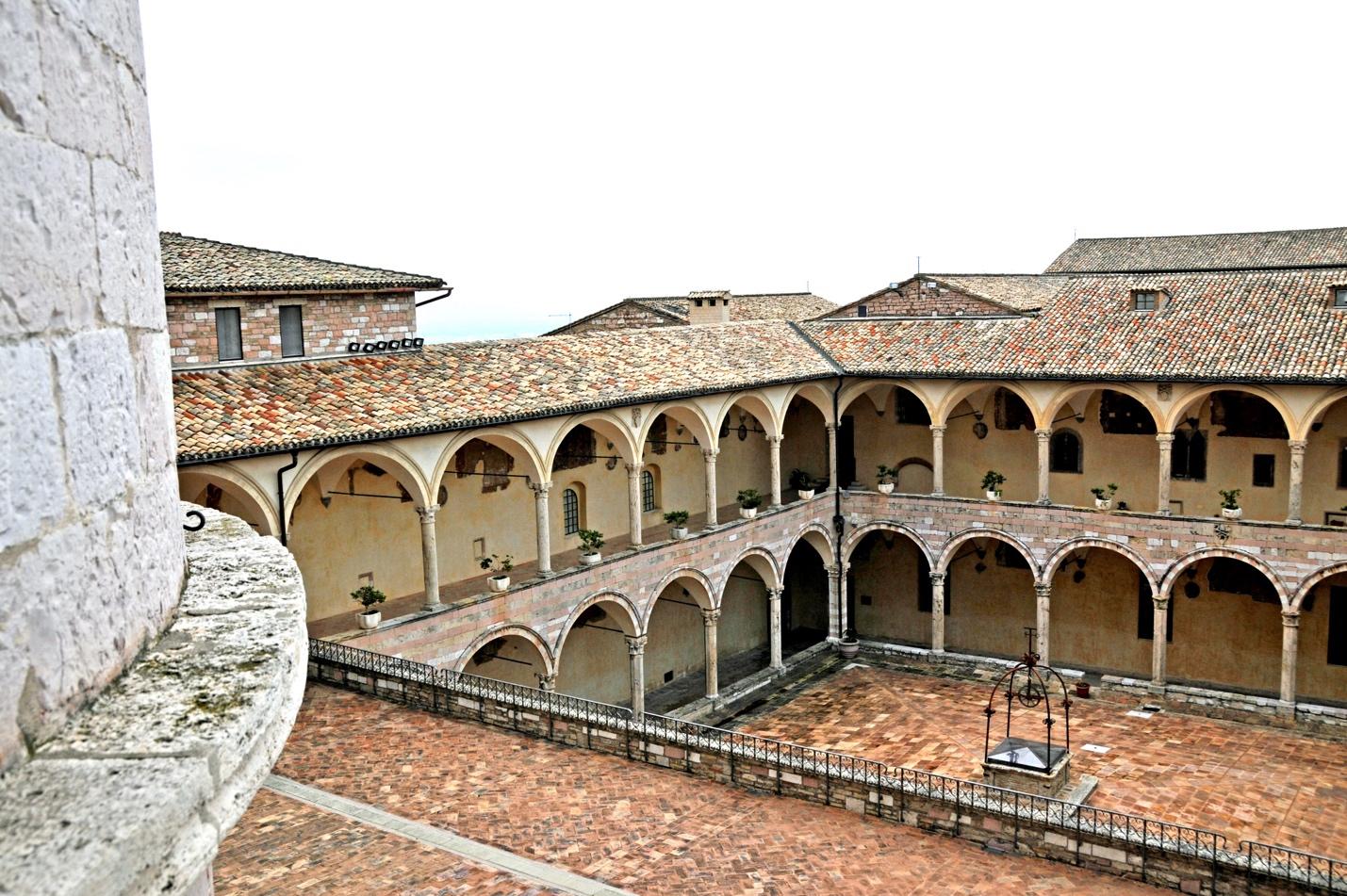
The most recently discovered manuscript of the De elephancia is the one shown at the opening of this post. It is now held in a library in Assisi, Italy. If “Assisi” sounds familiar to you as a city associated with leprosy, then you know your history well. Saint Francis of Assisi (born ca. 1180, died 1226) may have been alive when this manuscript was made, sometime in the second half of the 12th century. We don’t know that it was made for him or any of his followers, nor how it came to reside in the convent’s library.

A photo of the courtyard of a large building, with porticos. Source: https://upload.wikimedia.org/wikipedia/commons/e/e8/%22_Basilica_di_San_Francesco_%28Assisi%29_Sacro_Convento_%22.jpg.
Photo of the courtyard of the Franciscan Convent in Assisi. Source: https://upload.wikimedia.org/wikipedia/commons/e/e8/%22_Basilica_di_San_Francesco_%28Assisi%29_Sacro_Convento_%22.jpg

We do know, however, that care of leprosi—persons suffering from leprosy—came to be a main task of the Franciscans. Indeed, we have reason to think the Francis himself was afflicted by the disease, and disabled by it.5

What does a nearly 1000-year-old leprosy text have to add to interventions to deal with this disease now? The concerns of the international agencies involved in leprosy research and public health are necessarily focused on leprosy in the present day, and disrupting its ability to inflict future damage on human populations. New drugs, new therapeutic interventions, new mechanisms to detect prevalence and modes of transmission—these are all urgent concerns. Yet the concern for stigma goes beyond chemistry or genetics and gets us back to culture.

Yes, we are learning a lot about Constantine, thanks to work of such skilled young scholars as Brian Long, Outi Kaltio, and Anna Gili. And yes, we have learned much about the persecutions of “lepers” in southern France in the early 14th century from the recent researches of the historian, Tzafrir Barzilay. But we cannot yet say whether shifting ideas about leprosy per se played a role in violently compromising the culture of institutional care that had developed for over two centuries in medieval Europe. It is important for us to consider how stigma is transmitted, and recognize that it is not a universal constant. 

Constantine’s De elephancia carries no opprobrium about the disease, even as it recognizes the physical symptoms it causes. Leprosy may be a “neglected” disease now, but that neglect is on us, not the past.

This essay is dedicated to the several hundred members of the MEDMED community, an online forum that, for the past fifteen years, has been “modelling good behavior” in combining capacious curiosity, methodological rigor, and scholarly generosity. Grazie mille especially to Iolanda Ventura, who brought the Assisi manuscript to my attention.

Notes

1.  In the medieval Galenic system, the gonads of both the male and female were thought to produce semen, ejaculated during sexual intercourse.

2. All quotations from the De elephancia draw on Martín Ferreira’s 1996 edition (hereafter MF), as well as my own consultation of the earliest manuscripts. In the two oldest extant copies of the De elephancia, Brussels, KBR, MS 14322-23 and Munich, BSB, Clm 23535, as well as the late 12th-century copy, Assisi 573, elephantia appears in this passage as the standard name for the disease. In the later 12th-century English manuscript, Cambridge, Gonville & Caius College, MS 411/415, however, lepra appears, as it does in most later copies and in the Renaissance printed editions.

3. On Constantine’s networks of support, see Kwakkel and Newton 2019.

4. Most recently on the Pantegni’s circulation, see Gili 2023.

5. See Trembinski 2020.

Further Reading:

Gili, Anna. “I Codici della Pantegni tra tradizione e innovazione,” Gazette du livre médiéval, no 67 (2021-2023), 37-63.

Green, Monica H. “Medicine in France and England in the Long Twelfth Century: Inheritors and Creators of European Medicine,” in: France et Angleterre: manuscrits médiévaux entre 700 et 1200, ed. Charlotte Denoël and Francesco Siri, Bibliologia 57 (Turnhout: Brepols, 2020), pp. 363-388.

Green, Monica H. “An Essay for World Leprosy Day 2020: Leprosy’s Medieval History and What We Can Learn from It Today,” Twitter, 26 January 2020, posted on Academia.edu, https://www.academia.edu/44229146

Hayes, Dawn Marie. “The Case of Geoffrey of Hauteville, Lord of Ragusa: A Story of Leprosy and Legitimacy from Norman Sicily,” Speculum 98, no. 1 (Jan 2023), 86-121.

Kwakkel, Erik, and Francis Newton. Medicine at Monte Cassino: Constantine the African and the Oldest Manuscript of His ‘Liber Pantegni’ (Turnhout: Brepols, 2019).

Martín Ferreira, Ana Isabel, ed. Tratado médico de Constantino el Africano: Constantini Liber de elephancia ([Valladolid]: Universidad de Valladolid, 1996).

Trembinski, Donna. Illness and Authority: Disability in the Life and Lives of Francis of Assisi (Toronto: University of Toronto Press, 2020).