What Would Constantine Do? A Post on Science and Migration in Honor of World Leprosy Day 2026

“Recently, Mycobacterium lepromatosis, a new unculturable mycobacterial species associated with diffuse lepromatous leprosy, also known as Lucio’s leprosy or Latapi’s leprosy, was described by Han et al.” (Singh and Cole 2011)

Housed high at the monastery of Monte Cassino in southern Italy, looking out over the Mediterranean world, what would Constantinus Africanus, our leprosy specialist from 1000 years ago, have made of this news of a “new” species of leprosy? As the author of the earliest specialized Latin treatise on leprosy, he would have understood that the disease manifested in different ways. As the translator of works that would shape the face of European medicine for the next 400 years, he would have understood the incredible capacity of medical knowledge to alleviate human suffering.


The modern abbey of Monte Cassino. Source: Martin Collin, Wikimedia, https://commons.wikimedia.org/wiki/File:View_of_Monte_Cassino_monastery_from_Polish_cemetery.jpg, accessed 25.i.2026.

But there was also much he wouldn’t have been able to process. He would have had no mental framework to grasp the concept of “bacteria.” Not simply would the Mexican physicians Rafael Lucio Nájera (1818-1866) and Fernando Latapí (1902-1989) have been unknown to him, but so would the very idea of “Mexico.”1 He would have had trouble seeing how both this “second species” of leprosy as well as the first (Mycobacterium leprae, discovered in 1873) could be connected to human migrations over the course of millennia, for he would have had no concept of evolution.

Nevertheless, he may be just the inspiration we need right now. This year, as we celebrate World Leprosy Day 2026, the modern world’s infrastructure of global health is being torn apart as the result of anti-science and anti-immigrant sentiments. This 11th-century Arabic-speaking North African émigré/Italian immigrant, who first introduced Islamic medicine to Christian Europe, is not only a representative of science, but also a reminder of the role migration plays in human health and disease. It is part of who we are as humans, and it has been because of human migrations that many infectious diseases have been acquired. And it has also been in the process of fighting infectious diseases that the medical arts and sciences have been born.

Confirming the Deep Human History of Mycobacterium lepromatosis in the Americas

In this past year, one of the youngest fields of science, paleogenomics, pushed back the history of leprosy in the “new” worlds of the Americas by at least 10,000 years. As specialists in leprosy around the world will admit, social stigma creates barriers to open discussion and humane treatment. Although leprosy has long carried that burden, recognizing it as a global disease gives us a new way to think beyond stigma and focus instead on shared histories.

In 2023, I wrote about both Han’s leprosy, M. lepromatosis, and Hansen’s disease, M. leprae. When I first learned about M. lepromatosis in 2012, four years after it had been clinically described in 2008 by its real discoverer, Xiang-Yang Han (an infectious disease specialist at the M. D. Anderson Cancer Center in Houston), my immediate thought was “How can there be a ‘new’ species of such an old, slowly evolving disease?” I followed Han’s subsequent work
on the genetic structure and epidemiology of M. lepromatosis and saw that he, too, suspected that the organism had a very deep history. So deep, in fact, it must have predated modern humans.

That gut sense was confirmed this past year, when two separate studies retrieved molecular fragments of the organism from buried remains in the Americas dating back, in one case, to at least 4000 years ago (Ramirez et al. 2025). Even that estimate was likely conservative, since the evolutionary distance between the strains recovered from Canadian and Argentinian aDNA and a living strain still found in North America suggested that the organism may have been circulating in human hosts for at least 10,000 years (Lopopolo et al. 2025). Comparing the evolution of the two leprosies (which are more closely related to each other than any other known organisms in the world), it now seems that, evolutionarily, they may have diverged from each other somewhere between 700,000 and 2 million years ago.

Since modern humans did not exist 700,000 years ago, in what host(s) have these two diseases persisted? It was already well known that at least one of the Old World strains of leprosy, M. leprae, established itself among armadillos in the Americas following its importation into the Americas, perhaps as early as the 16th century. But that was clearly a new, post-Contact transference from humans to armadillos. As discussed in the World Leprosy Day blogpost last year, squirrels have now been confirmed in the transmission of leprosy in medieval England, no doubt thanks to the intense use of squirrel furs for a high-end cloak lining known as vair. But whether humans gave it to squirrels, or squirrels to humans, is still unclear.

A crowned figure examining a urine flask, from a late 12th-century compendium (made in northern France) of southern Italian medical texts. The lining of the figure’s cloak shows the characteristic pattern of vair, squirrel’s fur, whose use may have been involved in the spread of leprosy. Source: Breslau Codex, f. 156ra, detail: initial ‘D’ opening Maurus, De urinis.

The squirrel connection was all the more perplexing because it has been known since 2014 that M. lepromatosis (the “American” leprosy) also is found in squirrels in the United Kingdom. It is now estimated that the lineage of M. lepromatosis found in UK squirrels branched off from its known American cousins about 3000 years ago. When (and how) it was transferred eastward across the Atlantic remains completely unclear.

Infectious Diseases, Migration Histories, and Candlesticks

Even beyond the squirrel question, having the history of leprosy in the Americas so vastly expanded by just two studies allows us to situate this “new world” disease against our narratives of its closest known “old world” relative, M. leprae, whose pre- and post-Contact globalizing histories have been recounted in previous posts. For the post-Contact history, family trees of M. leprae’s modern genomes have informed us about its westward transmission across the Atlantic as systems of colonization and slavery expanded (Green 2022). For the pre-Contact period, we already know the evolutionarily oldest strains are found near the Pacific Rim coast, with expansion eastward into the Pacific Islands (Green 2025a) hundreds of years before Europeans and Africans regularly crossed the Atlantic.

For more than a decade, molecular clock estimates have suggested that M. leprae’s sustained history in humans only went back about 5-6000 years. Interestingly, a major study published this past year looking at a variety of infectious diseases in humans across Eurasia for the past 37,000 years found a similar pattern:

“Zoonotic pathogens are only detected from around 6,500 years ago, peaking roughly 5,000 years ago,coinciding with the widespread domestication of livestock. Our findings provide direct evidence that this lifestyle change resulted in an increased infectious disease burden. They also indicate that the spread of these pathogens increased substantially during subsequent millennia, coinciding with the pastoralist migrations from the Eurasian Steppe.” (Sikora et al. 2025)
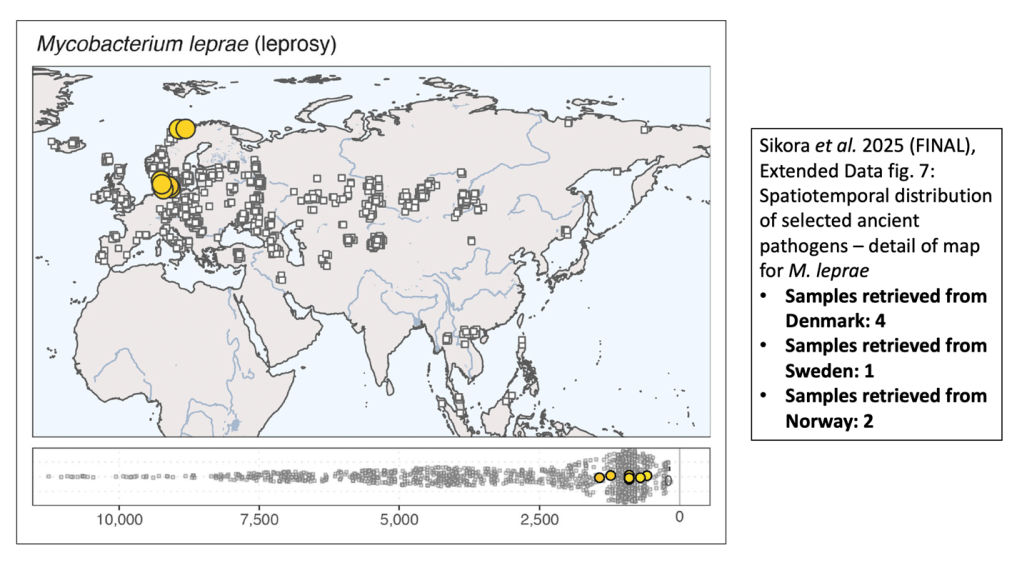
A map showing the locations of 1313 samples of human remains, covering a period of 37 millennia, used for a recent study of human infectious diseases in Eurasia. The yellow circles indicate where M. leprae was retrieved in the last 2000 years. Source: Sikora et al. 2025.

A cumulative map of M. leprae aDNA retrieved thus far from Afro-Eurasia is actually much fuller than this, but it is painting a fairly consistent picture. Most of that expansion seems to have happened in the past 2500 years or so. Circumstantially, many of those expansions seem to have been within the context of human migrations, either voluntary or involuntary.

Just this past week, a team of bioarchaeologists and paleogeneticists published another aDNA study documenting the presence in Colombia at least 5000 years ago of a strain of another human pathogen, Treponema pallidum, that was a “sister” to the strains that would branch into the three subspecies we know today causing syphilis (T. p. pallidum), yaws (T. p. pertenue), and bejel (T. p. endemicum). Noting that such discoveries “make it possible to move beyond simplistic ideas of where diseases geographically come from,” an editorial accompanying the study observed that:

“Far from static or specific to a human population or environment, pathogens are tethered to mobile human and animal hosts and reservoirs, molded by human experiences and biosocial and environmental conditions, adaptable, and globalized.” (Zuckerman and Bailey 2026)

Like leprosy, syphilis has been a disease that, at least once it manifested in Europe at the end of the 15th century, elicited stigma and ostracization. But to say that hatred or bigotry are perennial companions of infectious disease shows an unawareness of history. Reactions have never been uniform. Bioarchaeology repeatedly gives us examples of care rather than ostracism; the historical record is increasingly giving us evidence of communalism in the face of overwhelming pandemic onslaughts, not just anarchy and accusations (Green 2025b).

As paleogenomics offers us, for the first time, the opportunity to construct long evolutionary histories of the world’s most impactful diseases, we have the opportunity to rethink what it means for pathogens to be “tethered” to our histories. Combining those material histories of disease with intellectual and social histories of the medical arts and sciences allows us to reconceive how science itself is part of the landscape we have created. Note that word “adaptable.” Just as the pathogens adapt to new hosts (human and animal), so medical science has allowed humans to continually adapt to new environments. And medical science is necessarily cumulative. There is a reason the first Hippocratic aphorism reads “Life is short. The art is long.”

In the United States, where I write today, science and immigrants are both under attack. The entire system of public health infrastructures—from vaccines to food safety to environmental protections—is being dismantled at the same time that extraordinarily cruel measures are being implemented to chase out and deport immigrants exactly like Constantine would have been a millennium ago.

Once again, Constantine helps reset our balance. A 12th-century pair of exquisitely crafted candlesticks, perhaps made at the Belgium abbey of Stavelot, depict the world’s three (!) continents and what each offered human culture (Qassiti 2026, drawing on Müller 2023). AFRICA displays an open book with the inscription SCIENTIA—wisdom, learning, science. MEDICINA and THEORICA/PRACTICA (theory and practice), on the other candlestick, seem to be a particular nod to Constantine’s recent impact on medical learning in Europe. Is it a coincidence that the abbot of Stavelot, Wibald (1098-1158), had himself briefly served as abbot of Monte Cassino around the time these extraordinarily crafted works of art were made?
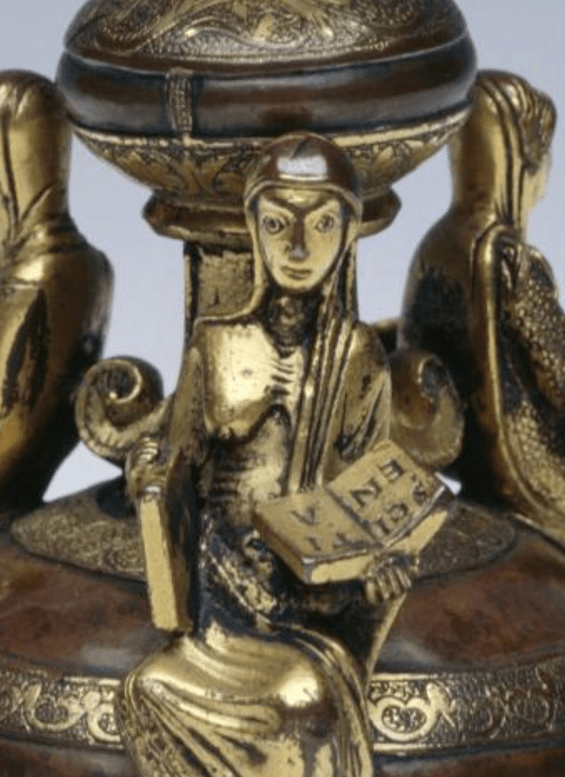
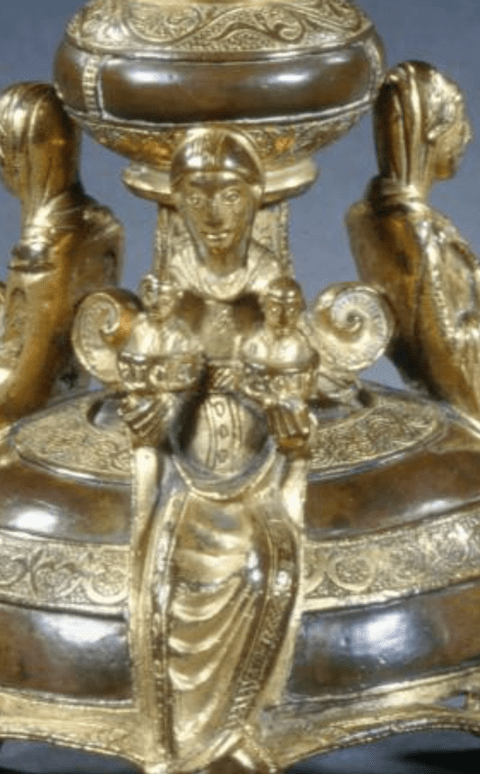
Details of the Hildesheim candlesticks with allegorical figures associating Scientia with Africa (left), and Theorica and Practica (right) with Medicina, 12th century. Source: Fotograf*in: Christian Tepper; https://www.bildindex.de/document/obj20313186, accessed 25.i.2026.

Infectious diseases arise because humans do what humans do. They interact with their environments. They explore. They migrate. The medical sciences and humanities are our response to the accidental harms we encounter. Leprosy’s long global history reflects back at us the millennia of encounters we’ve had with this disease. Its mirror also shows us the choices we can make now in living up to our fullest potential as human beings: to care for each other, celebrating the wisdom we have acquired and seeking even more. May we all be candles of such light!


This essay is dedicated to the memory of Francis Lanneau Newton, (28 February 1928 – 14 February 2025), amicus optimus Constantini Africani.


Further Reading:

Bozzi, Davide, Nasreen Z. Broomandkhoshbacht, Miguel Delgado, Jane E. Buikstra, Carlos Eduardo G. Amorim, Kalina Kassadjikova, Melissa Pratt Estrada, Gilbert Greub, Nicolas Rascovan, David Šmajs, Lars Fehren-Schmitz, Anna-Sapfo Malaspinas, and Elizabeth A. Nelson. “A 5500-year-old Treponema pallidum Genome from Sabana de Bogotá, Colombia,” Science 391, no. 6783 (22 Jan 2026).

Gili, Anna. Leprosy in the Mediterranean Medical Literature: The ‘Kitāb al-Malakī’ and Related Texts (Berlin: De Gruyter, 2026).

Green, Monica H. “Leprosy as an Endemic Disease: The US and Brazil,” Twitter thread for World Leprosy Day 2022, 30 January 2022, archival copy posted on Knowledge Commons, https://doi.org/10.17613/fn8m2-xwp73.

Green, Monica H. “Hansen’s Disease, Han’s Disease, and the Global History of Leprosy – World Leprosy Day 2023 Twitter thread,” Twitter, 29 February 2023, archived at Knowledge Commons, https://doi.org/10.17613/padf2-vcj87.

Green, Monica H. “The Stigma of Neglect: Why We Know Less Than We Should About Medieval Leprosy. A Post in Honor of World Leprosy Day 2024,” Constantinus Africanus (blog), 28 Jan 2024, https://constantinusafricanus.com/2024/01/28/the-stigma-of-neglect-why-we-know-less-than-we-should-about-medieval-leprosy/, archived at Knowledge Commons, https://doi.org/10.17613/f2sv4-73114 .

Green, Monica H. “Leprosy in the Global Middle Ages: A Slow Pandemic. A Post in Honor of World Leprosy Day 2025,”
Constantinus Africanus, 26 Jan 2025, https://constantinusafricanus.com/2025/01/26/leprosy-in-the-global-middle-ages-a-slow-pandemic/, archived copy on Knowledge Commons, https://doi.org/10.17613/y59xw-v4g32. [Green 2025a]

Green, Monica H. The Black Death: The Medieval Plague Pandemic Through the Eyes of Ibn Battuta, History for the 21st Century (H21) Project, 01 Sep 2025, https://www.history21.com/owit-module/the-black-death-the-medieval-plague-pandemic/, https://doi.org/10.17613/qeznz-tcx61. [Green 2025b]

Lopopolo, Maria, Charlotte Avanzi, Sebastian Duchene, Pierre Luisi, Alida de Flamingh, Gabriel Yaxal Ponce-Soto, Gaetan Tressieres, Sarah Neumeyer, Frédéric Lemoine, Elizabeth A. Nelson, Miren Iraeta-Orbegozo, Jerome S. Cybulski, Joycelynn Mitchell, Vilma T. Marks, Linda B. Adams, John Lindo, Michael DeGiorgio, Nery Ortiz, Carlos Wiens, Juri Hiebert, Alexandro Bonifaz, Griselda Montes de Oca, Vanessa Paredes-Solis, Carlos Franco-Paredes, Lucio Vera-Cabrera, José G. Pereira Brunelli, Mary Jackson, John S. Spencer, Claudio G. Salgado, Xiang-Yang Han, Camron M. Pearce, Alaine K. Warren, Patricia S. Rosa, Amanda J. de Finardi, Andréa de F. F. Belone, Cynthia Ferreira, Philip N. Suffys, Amanda N. Brum Fontes, Sidra E. G. Vasconcellos, Roxane Schaub, Pierre Couppié, Kinan Drak Alsibai, Rigoberto Hernández-Castro, Mayra Silva Miranda, Iris Estrada-Garcia, Fermin Jurado-Santacruz, Ludovic Orlando, Hannes Schroeder, Lluis Quintana-Murci, Mariano Del Papa, Ramanuj Lahiri, Ripan S. Malhi, Simon Rasmussen, and Nicolás Rascovan. “Uncovering Pre-European Contact Leprosy in the Americas and Its Enduring Persistence,” Science 389 (24 Jul 2025), eadu7144.

Müller, Kathrin. “Sancta Sapientia and the Science of Medicine: A Pair of Twelfth-Century Candlesticks with Female Allegories in Hildesheim,” Codex Aquilarensis 39 (2023), 61–78.

Qassiti, Mohamed. “Constantinus Africanus – A North African Migrant Revolutionises Medieval Latin Medicine,” Deutsche Digitale Bibliothek, 13 Jan 2026, https://www.deutsche-digitale-bibliothek.de/content/blog/constantinus-africanus-ein-nordafrikanischer-migrant-revolutioniert-die-lateinische-medizin-des-mittelalters?lang=en.

Ramirez, Darío A., T. Lesley Sitter, Sanni Översti, María José Herrera-Soto, Nicolás Pastor, Oscar Eduardo Fontana-Silva, Casey L. Kirkpatrick, José Castelleti-Dellepiane, Rodrigo Nores and Kirsten I. Bos. “4,000-Year-Old Mycobacterium lepromatosis Genomes from Chile Reveal Long Establishment of Hansen’s Disease in the Americas,” Nature Ecology and Evolution 9 (2025), 1685–1693.

Sikora, Martin, Elisabetta Canteri, Antonio Fernandez-Guerra, Nikolay Oskolkov, Rasmus Ågren, Lena Hansson, Evan K. Irving-Pease, Barbara Mühlemann, Sofie Holtsmark Nielsen, Gabriele Scorrano, Morten E. Allentoft, Frederik Valeur Seersholm, Hannes Schroeder, Charleen Gaunitz, Jesper Stenderup, Lasse Vinner, Terry C. Jones, Björn Nystedt, Karl-Göran Sjögren, Julian Parkhill, Lars Fugger, Fernando Racimo, Kristian Kristiansen, Astrid K. N. Iversen, and Eske Willerslev. “The Spatio-temporal Distribution of Human Pathogens in Ancient Eurasia,” Nature 642 (24 Jul 2025), 1011-1019.

Singh, Pushpendra, and Stewart T. Cole. “Mycobacterium Leprae: Genes, Pseudogenes and Genetic Diversity,” Future Microbiology 6, no. 1 (2011), 57–71, https://doi.org/10.2217/fmb.10.153.

Zuckerman, Molly K. and Lydia Bailey. “Uncovering the Secrets of Syphilis,” Science 22 January 2026, 352-353, https://doi.org/10.1126/science.aee7963.


1 Constantine had, of course, had close associations with the Norman nobility who arrived in southern Italy around the same time he did (and who may have even commissioned his treatise on leprosy). Whether anyone in these circles knew about the possible Norse encounters with Mesoamerica around the year 1000 is unclear; see Valeria Hansen, The Year 1000: When Explorers Connected the World—and Globalization Began (New York: Scribner, 2020).

An Eleventh-Century WebMD: The Viaticum of Constantine the African

Up until this point we’ve been somewhat abstract in talking about Constantine the African’s works, as a set of texts that had dramatic effects on other texts. But for a patient who has unexpectedly come down with an unknown illness, of course, the intellectual tradition behind their care is likely to be of little interest: they want to put a name to their affliction and, ideally, cure it. So from the perspective of this hypothetical patient, what good were Constantine’s translations?

To answer this question, we need to have some sense of the places in which medical care occurred, and to understand the kinds of medical training that were available. Medical care was undertaken in multiple settings in the medieval world: in homes, to be sure, and also in monasteries and other institutions that likely attended to both bodily as well as spiritual health. At the highest levels, medical practitioners could be deeply learned and highly skilled experts, but there must have been an entire world of practitioners that is only rarely visible in our written sources.

Only a handful of images depict or illustrate medical practice in the period before Constantine was active in southern Italy; the tenth-century images found in this manuscript, Florence, Biblioteca Laurenziana, MS Plut. 73.41 (here f. 122v), illustrate how to cauterize patients suffering from various illnesses.

If we assume that a practitioner from Constantine’s own eleventh century was literate, how did they approach the treatment of a disease they were unfamiliar with? The answer is surprising, and illuminates the ways that medical care has both changed and remained the same in the intervening centuries. Before the mid eleventh century, the textual resources for medical practice had some limitations: for theoretical medicine, only a handful of formal medical treatises or commentaries would have been available, and even these circulated in modest numbers.

On the other hand, a large, fluid, and fascinating set of remedies was in circulation, often written scrappily on the blank pages and in the margins of manuscripts. But even though the remedies from this period that have been passed down to us may appear humble, we should not discount the possibility that they contain hard-earned empirical wisdom, gleaned from long experience with disease prevalence and herbal and other remedies available in a particular region.

In the eleventh century this situation began to change. Of course, as we have discussed, Constantine the African translated a considerable number of works from Arabic into Latin; but renewed attention was also given to texts that already existed in Latin. A work called the Passionarius, for example, combined a group of earlier texts into a handbook of medical practice. This text circulated in considerable numbers in Europe (and especially in Italy) in the eleventh and twelfth centuries—it was about as popular as the Theorica Pantegni—and in some cases was even furnished with several sets of annotations that clarified and explicated the text. Though its earliest manuscripts lack clear authorial attribution, the work became associated with the prominent scholar Gariopontus (died perhaps before 1056), who was praised by the prominent reforming monk Peter Damian as “a most upright man, superbly educated in the arts and in medicine.”1

What made the Passionarius so popular? Some of the work’s popularity must result from the organization of its presentation. While the empirical remedies that accrued over time in a manuscript might be haphazardly organized, this text followed the time-honored anatomical “head to toe” (a capite ad calcem) organizational scheme. For example, the Passionarius began by describing and giving causal explanations for several different subtypes of headache. Additionally, it presented multiple remedies for a particular illness; for the first subtype of headache, these included environmental remedies (avoiding both bright light and deep darkness), bloodletting, dietary remedies, and multiple compound remedies.

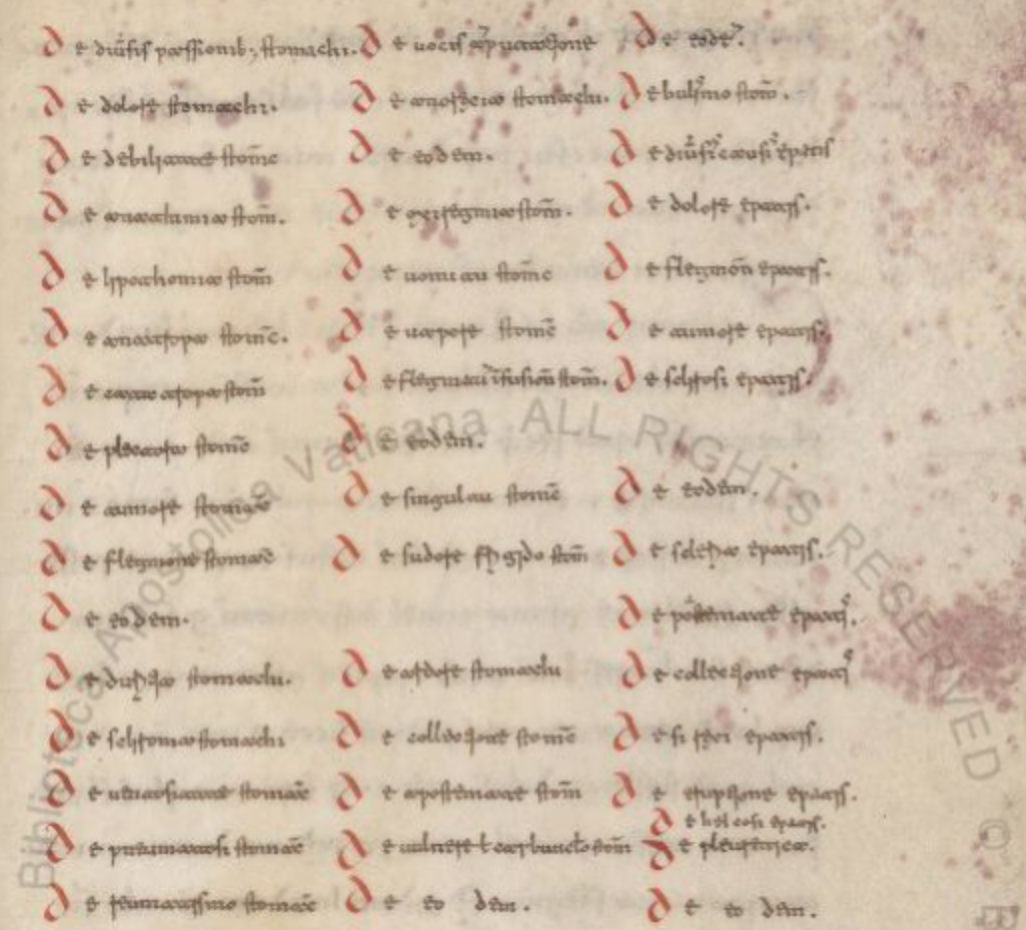
The text and chapter lists of this manuscript of the Passionarius are written in Beneventan, a striking script that flourished in southern Italy in Gariopontus and Constantine’s eleventh century. Vatican, BAV, Archivio Capitolare San Pietro, MS H 44, f. 23r.

But for all its virtues, the Passionarius must have also been challenging. For one, Gariopontus’ terminology had to have been daunting for Greekless readers, describing illnesses with Greek words and phrases; the subtypes of headache it covers are cephalea, cephaloponia, and monopagia. Additionally, the same ailment was sometimes covered in successive chapters, with varying emphases and remedies. This resulted from the way that it combined multiple texts, but it must have stymied those readers who just wanted a quick, unambiguous explanation of a particular illness and some remedies.

If we turn to Constantine the African, whose career in southern Italy appears to have started in the 1070s, we might wonder: did Constantine know Gariopontus’ influential work? This question is harder to answer than we might think: though the Passionarius was listed in a booklist of the monastery of Monte Cassino shortly after Constantine was there, Constantine never referred to it explicitly, and the terminology that Constantine’s works share with Gariopontus was common to the longer history of Latin medicine.

It is tempting to suppose, however, that Constantine’s own handbook of practical medicine, the Viaticum, was intended as some kind of response to the Passionarius. Just as the Passionarius synthesized earlier works, the Viaticum was intended to serve as a handily sized, single-volume handbook of medical practice. Like the Passionarius, the Viaticum presents illnesses and remedies in “head to toe” order. (Instead of headaches, however, it begins with alopecia and hair loss.) The work’s title, Viaticum—which echoes the meaning of the work’s source text, Ibn al-Jazzar’s Zād al-musāfir wa-qūt al-ḥāḍir (meaning “Provisions for the Traveller and Nourishment for the Sedentary”)—suggests it was meant to serve as a portable medical reference for travelers. But where Ibn al-Jazzar’s Arabic text (and the Passionarius) often gave pages of remedies for each illness, Constantine’s translation often condensed these recipes to their essentials: to remedy hair loss from fasting, Constantine tersely lists temperate baths, a moderate diet, the avoidance of salty things, and anointing with poppy or iris oil. At times, however, Constantine’s zeal for compression appears to have led him to cut into the bone, and his text leaves out some of the steps—and sometimes even the quantities!—of the remedies in Ibn al-Jazzar’s text. Was it the case that Constantine felt that Ibn al-Jazzar’s text was a little too long to travel with comfortably? Given Constantine’s book-laden trip across the Mediterranean, he would have been a position to know.

In contrast to the Passionarius’ heavy use of Greek terminology, Constantine’s Viaticum may have been translated with the needs of non-specialist readers in mind. He gave the work a Latin title, and he used more Latin and less Greek terminology than Gariopontus and many of his other predecessors. Constantine spoke simply of “hair loss” (capilli cadentes) and trimmed down the Greek terms for headache’s subtypes. Where the Passionarius sometimes spread its discussion of a single illness over multiple chapters, the Viaticum’s coverage was more tightly focused, with chapters that were more clearly focused on a particular ailment.

The composition of the Viaticum appears to have encountered some “quality control” difficulties of its own. Beyond its occasionally odd Latin and a few nonsensical readings, the earliest copyists of the Viaticum appear to have made one major mistake in producing the earliest copies of the text. Its preface makes clear that Constantine had placed a comprehensive, “omnibus” list of all of the chapters of the entire work at the beginning of Book I (likely drawn from a similar chapter list in his Arabic source), but this preface also states that he intended for the seven books of the Viaticum to have their own lists (an organizational scheme that is found in the Passionarius and the earliest manuscripts of the Theorica Pantegni). In our earliest manuscript of the text, however, these subordinate chapter lists were not inserted; when they do begin to be inserted into later manuscripts, they can be cramped and awkward, given far less space than they really required. It is only in the course of the twelfth century that manuscript designers learned to give the Viaticum’s layout the space it required. We can also see evidence of this “retrofitting” of text and layout in the discrepancies between the tables of contents and the rubrics accompanying each chapter, something Mary Wack noticed some years ago when studying the Viaticum’s terminology for lovesickness.

In planning the layout of the Viaticum, Constantine wanted to emulate works like the Passionarius and the Pantegni, as well as the manuscripts of his Arabic source. Like this fragmentary copy of Ibn al-Jazzar’s text, Wellcome MS Arabic A406, the Viaticum gave a list of all of the chapters of the entire work at the beginning.

Even though the Viaticum may not have lived up to its creator’s intentions, this hardly hindered its popularity, and at least 35 full and partial copies of the Viaticum survive from the century and a half after the work’s translation. If it did not prove quite as popular as the Passionarius in this period, it eventually became a massive success: it survives in well over a hundred copies, and was read—and, to all appearances, used—in many of the settings of medieval medicine. It appears to have been used heavily by monks, for example, and received commentaries at universities.

Nor, as we will see next time, was this one of Mark Twain’s little-read classics: as it grew in popularity, the Viaticum would reshape the ways that people thought about the body and its illnesses. More broadly—and although these practices hardly began with Gariopontus and Constantine—their works are echoed in modern attempts to understand and heal the body: like the imagined traveler who read Constantine’s Viaticum, we continue to use the parts of the body as an organizational rubric when we try to self-diagnose on WebMD; just as Gariopontus and Constantine’s readers must have known, words and names can still be sources of comfort to suffering readers.

Further Reading:

  • Demaitre, Luke E, Medieval Medicine: The Art of Healing from Head to Toe (Santa Barbara: Praeger, 2013).
  • Glaze, Florence Eliza, “Galen Refashioned: Gariopontus of Salerno’s Passionarius in the Later Middle Ages and Renaissance.” Ch. 3 in Textual Healing: Essays in Medieval and Early Modern Medicine, ed. Elizabeth Lane Furdell (Leiden: E.J. Brill, 2005): 53-77.
  • Glaze, Florence Eliza, “Gariopontus and the Salernitans: Textual Traditions in the Eleventh and Twelfth Centuries,” in La ‘Collectio Salernitana’ di Salvatore De Renzi, ed. Danielle Jacquart and Agostino Paravicini Bagliani (Firenze: SISMEL/Edizioni del Galluzzo, 2008), pp. 149-90.
  • Glaze, Florence Eliza, “Prolegomena: Scholastic Openings to Gariopontus of Salerno’s Passionarius,” in Between Text and Patient: The Medical Enterprise in Medieval and Early Modern Europe, ed. Florence Eliza Glaze and Brian Nance, Micrologus’ Library, 30 (Florence: SISMEL/Edizioni del Galluzzo, 2011), pp. 57-86.
  • Glaze, Florence Eliza, “Speaking in Tongues: Medical Wisdom and Glossing Practices in and around Salerno, c. 1040-1200,” in Herbs and Healers from the Ancient Mediterranean through the Medieval West, ed. Anne Van Arsdall and Timothy Graham (Aldershot: Ashgate, 2012), pp. 63-106.
  • Horden, Peregrine, Hospitals and Healing from Antiquity to the Later Middle Ages (Aldershot: Ashgate, 2008).
  • Wack, Mary, Lovesickness in the Middle Ages: The ‘Viaticum’ and Its Commentaries (Philadelphia: University of Pennsylvania Press, 1990).
  • Wack, Mary, “‘Alī ibn al-‘Abbās al-Maǧūsī and Constantine on Love, and the Evolution of the Practica Pantegni,” in Constantine the African and ‘Ali ibn al-’Abbas al-Maǧusi: The ‘Pantegni’ and Related Texts, ed. Charles Burnett and Danielle Jacquart (Leiden: E. J. Brill, 1994), pp. 161-202.

[1]Translated by Peter Blum, in the Letters of Saint Peter Damian(Washington, DC: Catholic University Press, 1989),p. 108.

Ego Constantinus africanus montis cassinensis monacus

Constantinus Africanus (Constantine the African) is likely the most famous medieval writer most people have never heard of. At latest count, we can identify at least 1000 extant manuscript copies of his three dozen writings on various aspects of medicine. Those writings, collectively, probably comprise over one million words. To put that in perspective, the most famous Benedictine monk of the Middle Ages, Benedict of Nursia, is represented in only about 300 extant copies of his Rule describing the monastic life. Most of Constantine’s contemporary writers at Monte Cassino, the motherhouse of the Benedictine order, are known from only a handful of extant copies.

So who is Constantine the African? And why are we launching this blog devoted to him and his works? First and foremost, Constantine was the first to render a major body of Arabic science into Latin. Yes, a few works of mathematics and astronomy had become known in Europe in the 10th century. But no one had yet attempted what Constantine did: bringing a whole science, from introductory textbooks to works of great complexity, into the Latin language. Once translated, these works could—and did—circulate all over Europe. They transformed medical theory and practice in the lands we think of as western Europe, giving it a medical vocabulary and certain common concepts that we can still recognize in biomedicine today.


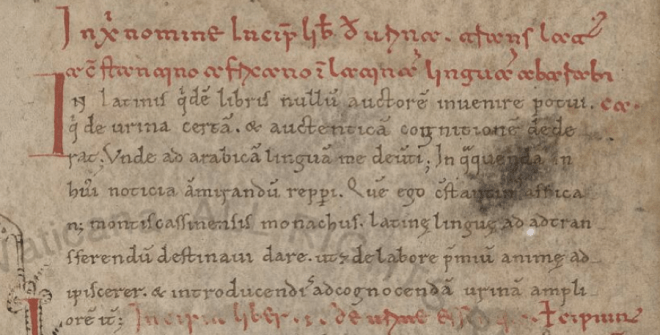
This is from the preface to Constantine’s translation of Isaac Israeli’s (d. 932) book on urines. In the 4th and 5th lines, Constantine identifies himself: “Quem ego constantinus affricanus montiscassinensis monachus. latinȩ linguȩ ad transferendum destinaui dare” (“which [book] I, Constantine the African, monk of Monte Cassino, committed myself to translate into the Latin language”). Source: Vatican, Biblioteca Apostolica Vaticana, MS Urb. lat. 1415, f. 1v (detail).

In several of his writings, Constantine identified himself with the title we’ve used here: Ego Constantinus africanus montis cassinensis monacus. “I, Constantine the African, monk of Monte Cassino.” Constantine’s self-naming raises a host of intriguing questions. All evidence suggests that he did indeed come from “Africa,” which here means the North African territory of “Ifriqiyah,” and Constantine appears to have come from the territory of modern Tunisia in particular. Ifriqiyah had come under Muslim rule in the eighth century, as part of the general expansion of Islam across North Africa. But what can we infer from the name “Constantine”? It was, after all, the name of one of the most famous converts in Christian history, the fourth-century emperor Constantine. Was Constantine, then, an Arabic-speaking Muslim who converted to Christianity? Or did Constantine come from an Arabic-speaking Christian community in North Africa? Scholars have been unsure how to untangle this aspect of Constantine’s background, though we will suggest a solution to this puzzle in a later post.

What matters for today is that our Constantine was a native Arabic speaker. And he was thoroughly immersed in Arabic medicine. In later posts, we’ll talk more about the period of efflorescence in Arabic medicine that Constantine was able to draw upon when he crossed the Mediterranean in the eleventh century, bringing a cache of medical books with him (at least one of which was partially lost). In fact, as we’ll show, Constantine captures, in his own life story, larger trends unfolding at the time that would bring the economies and cultures of the Islamic, Christian, and Jewish societies in the Mediterranean more tightly into contact.


In this passage from Book I of the De melancholia (On Melancholy), a translation of Ishaq ibn ‘Imran’s treatise on the same topic, Constantine follows his source in identifying “the sudden loss of his learned books” as the reason someone might fall into the despair of melancholy. Source: London, British Library, MS Burney 216, f. 95ra (detail).

So, why launch this blog now? First of all, today, the 22nd of December, is Constantine’s obit day—the day his death was celebrated at the Abbey. One of the few pieces of concrete biographical information we have for him was the entry of his name into Leo Marsicanus’s calendar at Monte Cassino, listing his death date as December 22. In what year that happened, we’re not sure. It would have been before 1098 or 1099, the date of the calendar, though beyond that we can’t be more precise. He was said to have “died full of days,” and from his surviving works we can see what extraordinary success he had in laying the foundations for a full curriculum of medical learning.


The Cassinese Calendar, written at Monte Cassino in 1098-1099, under the direction of Leo Marsicanus, who first started the monastery’s chronicle. The second line of this entry for the 22nd of December (the 11th kalends of January) indicates the date of death for Constantinus monachus medicus. Source: Vatican, Biblioteca Apostolica Vaticana, MS Borg. lat. 211, f. 13r (detail).

A bigger question is why, if Constantine has been invisible for so long, is he suddenly coming into view? There are a lot of reasons for this, some having to do with the recent growth of history of medicine as a major subdiscipline in medieval studies, some having to do with the amazing new possibilities for manuscript research that allow us access to so many copies of Constantine’s still-unedited works. One reason we are particularly delighted to share our new understanding about Constantine in this blog is because in his life story and in his widespread effects on European culture, he gives us the opportunity to see a “global Middle Ages.” Constantine’s own travels may have been confined to the Mediterranean. But the medical system he brought into Latin drew upon medical theory first articulated in antiquity but expanded and refined in the Islamic world. And it drew on the pharmaceutical lore of medical practitioners across central Eurasia, North Africa, and beyond.

This blog is co-authored by Monica Green and Brian Long. We are both historians of medicine and are both editing and studying Constantine’s many writings. We will be joined from time to time by guest bloggers as well. Our aim is to begin to share our findings about Constantine: new manuscripts we’ve discovered; new information about Constantine’s Arabic sources; new leads about the impact of Constantine’s work in transforming the landscape of learned medicine in Europe. Almost every aspect of medicine would indeed change under Constantine’s influence. The life and works of this singular African monk therefore afford us the opportunity to peer into the heart of one of the most transformative periods of history.

Further Reading:

There isn’t a lot published on Constantine the African yet, and as we’ve noted, most of his works have not yet been edited, let alone translated into modern languages. Here are a few publications that can give you a hint of how interesting his life and times were.